 Skip to content
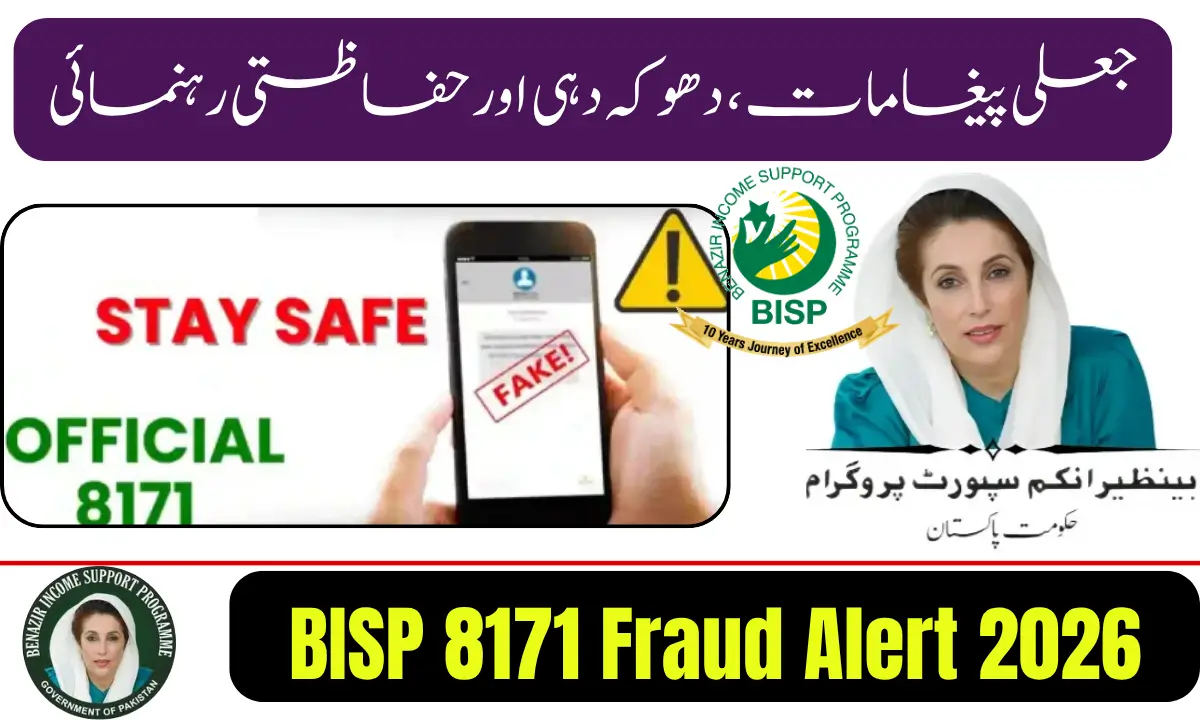
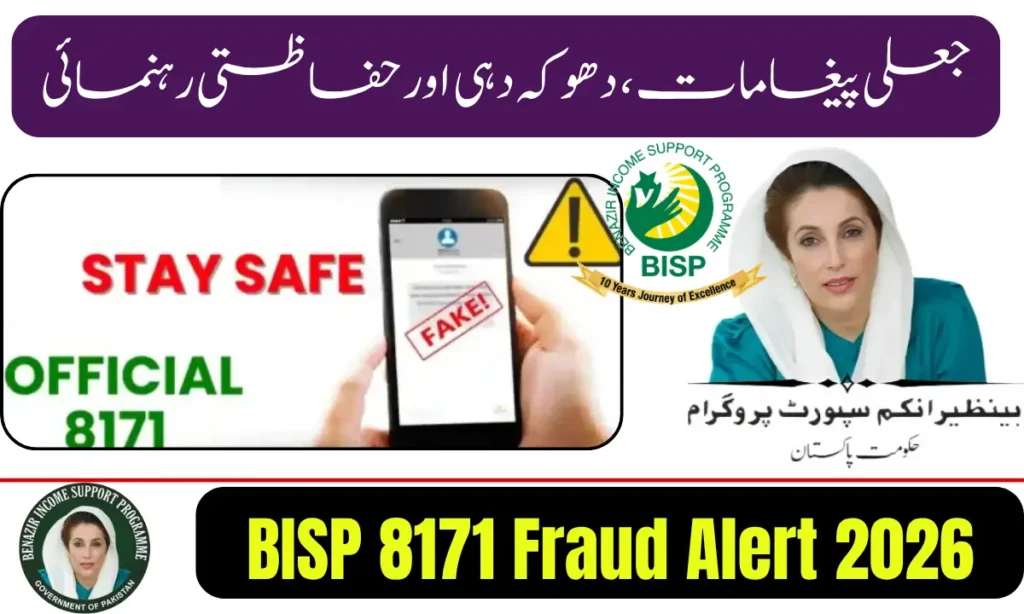
The Benazir Income Support Programme (BISP) continues to support millions of families across Pakistan. However, in 2026, a rise in 8171 scams has put beneficiaries at serious risk. Many people are receiving fake SMS, calls, and messages pretending to be from BISP 8171, leading to financial loss and personal data theft.
This guide explains everything you need to know to protect yourself and your payments.
What is the BISP 8171 Scam in 2026?
The BISP 8171 scam involves fraudsters pretending to be officials from BISP. They send fake messages or make calls claiming that:
- Your payment is ready
- You need to “verify” your CNIC
- You must pay a fee to receive funds
These scams target beneficiaries of programs like:
- Ehsaas Program
- Benazir Kafalat Program
The goal is simple: steal your money or personal information.
Common Types of 8171 Fraud
Understanding scam methods can help you stay safe:
1. Fake SMS from Unknown Numbers
Scammers send messages using numbers similar to 8171, asking you to click links or share details.
2. Fraud Calls
You may receive a call from someone claiming to be a BISP officer asking for:
- CNIC number
- OTP code
- Bank details
3. Fake Websites
Fraudsters create websites that look like the official **BISP portal to collect your data.
4. Payment Deduction Scams
Some agents illegally deduct money from your BISP payment.
How to Identify Real BISP Messages
To avoid scams, remember these key points:
- Official messages only come from 8171
- BISP never asks for money or fees
- No personal information is requested via call or SMS
- Payments are verified through official channels only
If a message looks suspicious, it is likely a scam.
How to Check Your BISP 8171 Status Safely
Always use official methods to check your eligibility or payment:
Method 1: SMS Verification
Send your CNIC number to 8171 and wait for a response.
Method 2: Official Portal
Visit the official BISP website to check your status securely.
Method 3: BISP Office Visit
Go to the nearest BISP center for in-person verification.
What to Do If You Receive a Scam Message
If you suspect fraud, take these steps immediately:
- Do not reply or click any links
- Block the number
- Report the message to BISP helpline
- Inform local authorities if money is involved
Quick action can prevent further damage.
Important Safety Tips for Beneficiaries
To stay protected in 2026:
- Never share your CNIC or OTP with anyone
- Avoid agents asking for “service charges”
- Always verify information through official channels
- Keep your mobile number registered with your CNIC
These simple steps can protect your financial support.
Why Awareness About 8171 Scams is Important
Millions of families depend on BISP payments for daily expenses. Scammers exploit lack of awareness, especially in rural areas.
By understanding these scams, beneficiaries can:
- Protect their money
- Avoid identity theft
- Help others stay safe
Final Words
The BISP 8171 Scam Alert 2026 highlights the need for caution and awareness. While programs like Benazir Income Support Programme are designed to help people, fraudsters are constantly finding new ways to exploit beneficiaries.
Always rely on official sources, stay alert, and never share sensitive information. Your awareness is your strongest protection against fraud.