 Skip to content
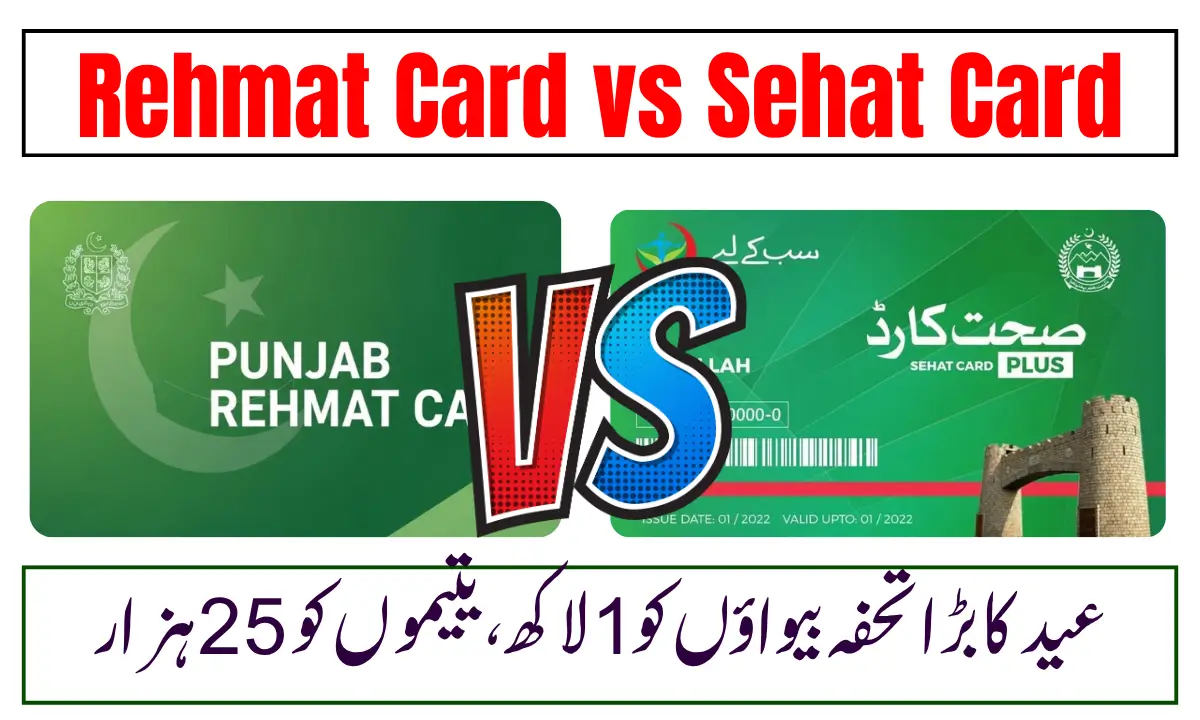
Government welfare and healthcare initiatives in Pakistan have expanded in recent years to provide financial and medical assistance to citizens. Two popular programs that often confuse people are the Rehmat Card and the Sehat Card. This article will clarify their differences, benefits, eligibility, and how users can maximize these programs in 2026.
What is the Rehmat Card?
The Rehmat Card is a social welfare initiative primarily designed to provide financial support to low-income families. Launched by provincial governments, its main goal is to assist vulnerable citizens with cash transfers to meet daily household expenses.
Key Features of Rehmat Card:
- Direct cash assistance to eligible families
- Focus on poverty alleviation and financial support
- Can be used for daily household needs
- Provincial registration and verification required
The Rehmat Card aims to reduce financial burdens and improve living standards for marginalized communities.
What is the Sehat Card?
The Sehat Card is a healthcare-focused program aimed at providing free medical treatment and hospitalization for eligible citizens. This program targets families who cannot afford private medical care and ensures access to public and private hospitals across Pakistan.
Key Features of Sehat Card:
- Covers inpatient treatment and surgeries
- Access to private and government hospitals
- Health insurance benefits for eligible families
- Requires registration with the health department
Unlike the Rehmat Card, the Sehat Card is specifically for medical emergencies and planned treatments, ensuring citizens receive timely healthcare.
Rehmat Card vs Sehat Card: Key Differences
| Feature | Rehmat Card | Sehat Card |
|---|---|---|
| Purpose | Financial support for daily expenses | Healthcare and hospital treatment |
| Beneficiaries | Low-income households | Families requiring medical assistance |
| Mode of Support | Direct cash transfers | Health insurance coverage |
| Registration | Provincial welfare department | Health department registration |
| Usage | Household needs | Hospital bills and medical treatment |
These differences make it easier for citizens to decide which program suits their needs. Many families even benefit from using both programs simultaneously.
Eligibility Criteria for Users
Rehmat Card:
- Families living below the poverty line
- Verification through provincial welfare authorities
- Citizens must have a valid CNIC
Sehat Card:
- Families registered under health department schemes
- Citizens with chronic illnesses or medical emergencies
- Priority to low-income households
Understanding eligibility ensures that users apply for the correct program and receive timely benefits.
How Users Can Apply in 2026
Rehmat Card Application:
- Visit the provincial welfare website
- Fill out the registration form with CNIC and family details
- Submit the required documents for verification
- Receive the Rehmat Card and activate cash transfers
Sehat Card Application:
- Register via the official health department portal
- Upload CNIC and relevant health documents
- Verify family members and medical eligibility
- Receive the Sehat Card for hospital usage
Both programs have streamlined online portals to make the application process easy for citizens.
Which Card Should Users Choose?
- Choose Rehmat Card if your primary need is financial support for household expenses.
- Choose the Sehat Card if your priority is free medical treatment and health insurance coverage.
- Use Both Programs if you meet eligibility criteria for both financial and healthcare support, maximizing benefits in 2026.
Conclusion
For Pakistani citizens, understanding the Rehmat Card vs Sehat Card difference is essential to make the most of government welfare and health programs. While Rehmat Card focuses on financial aid, Sehat Card ensures medical care accessibility. Users should check eligibility, register online, and keep their information updated to fully benefit from these initiatives in 2026.